
Kiwi For Constipation
Can eating kiwi help prevent or resolve constipation?
Andrew Weil, M.D. | July 15, 2026
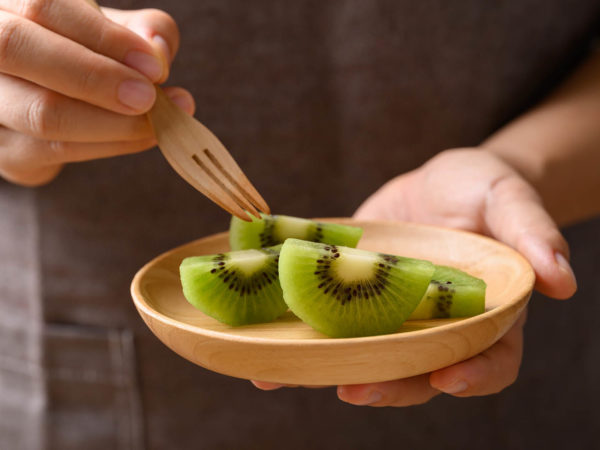
Constipation is a common gastrointestinal complaint that most people have experienced at least once. The bloated, painful feeling of not being able to pass stool easily is more than just uncomfortable—it could be a sign of a poor diet, insufficient exercise, or illness. Regular bowel movements are essential for good health, and although “regular” means different things to different people, constipation needs attention. There are several ways to address it before it becomes a serious medical issue, and, yes, kiwi is one of the foods that can help.
A research team based in New Zealand conducted a study (funded by a kiwi marketing company) that investigated the effects of eating kiwi on the number of weekly bowel movements as well as on gastrointestinal comfort (including bloating, nausea, heartburn, and other GI symptoms). Participants were divided into three groups, including a control group of people who were not constipated, a group with irritable bowel syndrome (IBS) with predominant constipation, and a group with functional constipation (not associated with a disease). Participants from all groups were randomly assigned to either eat two green kiwi fruits a day or take a daily psyllium supplement with about the same amount of fiber as the kiwi.
Among the constipated groups, eating kiwi or taking psyllium both resulted in about 1.5 more bowel movements a week. That is significant, because although some individuals naturally move their bowels more often than others, greater frequency has been associated with better health, including cardiac health. A large Japanese study followed more than 45,000 people for just over 13 years and found that those who reported having a bowel movement only a few times a week or less had a significantly higher rate of death from cardiovascular disease than those who typically had a bowel movement every day.
The New Zealand study showed that eating kiwi produced a greater benefit in overall gastrointestinal comfort for both constipation groups, while psyllium improved symptoms only in the group with IBS. There were no significant adverse events in either group.
I’m a big fan of kiwi for several reasons, including its appealing taste and its effect on mood. (Subscribers to the Weil Nutrition Corner on Substack can get my Kiwi Green Smoothie recipe here.) It’s rich in antioxidant vitamins C and E and provides plenty of vitamin K, which is good for bone strength and may help prevent coronary artery disease. It also provides potassium, which your heart, kidneys, muscles, and nerves all need. Since the little green fruit is also rich in fiber, I recommend it for occasional constipation. Know that other fiber-rich foods—including vegetables, wheat bran, and whole-grain breads and cereals—can also help keep you regular, as can powdered psyllium supplements. Drink plenty of water, exercise daily, and avoid caffeine and tobacco. Read more about healthy bowel movements here.
Andrew Weil, M.D.
Sources
Vermorken AJ, Andrès E, Cui Y. Bowel movement frequency, oxidative stress and disease prevention. Mol Clin Oncol. 2016 Oct;5(4):339-342. doi: 10.3892/mco.2016.987. Epub 2016 Aug 10. PMID: 27703675; PMCID: PMC5038884. pmc.ncbi.nlm.nih/articles/PMC5038884/
Gearry R, Fukudo S, Barbara G, Kuhn-Sherlock B, Ansell J, Blatchford P, Eady S, Wallace A, Butts C, Cremon C, Barbaro MR, Pagano I, Okawa Y, Muratubaki T, Okamoto T, Fuda M, Endo Y, Kano M, Kanazawa M, Nakaya N, Nakaya K, Drummond L. Consumption of 2 Green Kiwifruits Daily Improves Constipation and Abdominal Comfort-Results of an International Multicenter Randomized Controlled Trial. Am J Gastroenterol. 2023 Jun 1;118(6):1058-1068. doi: 10.14309/ajg.0000000000002124. Epub 2022 Dec 20. PMID: 36537785; PMCID: PMC10226473. pmc.ncbi.nlm.nih/articles/PMC10226473/
Honkura K, Tomata Y, Sugiyama K, Kaiho Y, Watanabe T, Zhang S, Sugawara Y, Tsuji I. Defecation frequency and cardiovascular disease mortality in Japan: The Ohsaki cohort study. Atherosclerosis. 2016 Mar;246:251-6. doi: 10.1016/j.atherosclerosis.2016.01.007. Epub 2016 Jan 13. PMID: 26812003. pubmed.ncbi.nlm.nih/26812003/