
Antibiotics And Gut Bacteria
Do antibiotics disrupt the gut microbiome?
Andrew Weil, M.D. | May 13, 2026
The discovery of penicillin nearly a century ago precipitated a revolution in human health—people no longer had to endure a prolonged illness or potentially die from common bacterial infections like pneumonia or strep throat. In fact, the thirty-year increase in average life expectancy that occurred over the twentieth century was largely due to the availability of an expanding roster of highly effective antibiotic medicines. But these powerful drugs have effects throughout the body, not just one specific infection site. Perhaps none of these effects are more significant than what happens in the gut.
The human intestinal tract is teeming with bacteria, in an environment referred to as the “gut microbiome.” Helpful bacteria in the gut do everything from breaking down food products to sending signals to the brain along the gut-brain axis. These are what we refer to as the “good bacteria.” One of their most important functions is keeping the bad kind in check— such as the bacteria that can cause intestinal distress or ulcers (including C. difficile and H. pylori). A loss of good bacteria in the gut often allows the bad ones to thrive, so it’s vital to keep the two kinds in proper balance.
The balance can be thrown off for a number of reasons, including poor diet, alcohol or tobacco use, or taking a course of antibiotics, which cannot distinguish between good and bad microbes. That’s why doctors usually suggest that patients taking antibiotics eat more yogurt and other fermented foods, which are known to increase good bacteria in the gut. Foods that boost good bacteria are referred to as “probiotic” for the benefits they provide.
Probiotic Foods for Gut Health
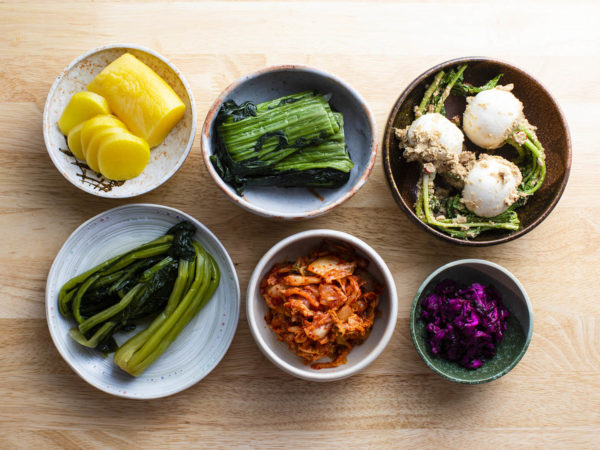
There are many foods that can help your gut microbiome, including fermented foods like yogurt with active cultures, kefir, sauerkraut, kimchi, and miso (see Top 5 Probiotic Foods for Gut Health). These foods are prudent additions to your diet for other reasons as well, since they contain essential nutrients for your bones, cardiovascular health, and immune function. When you’re taking antibiotics for an infection, it’s an especially good idea to increase consumption of probiotic foods; I also recommend adding a probiotic supplement during these times.
Your need for probiotics, however, doesn’t end when the antibiotic course is complete. The effect on your gut microbiome is a lasting one, as one surprising new report shows. Researchers studied fecal samples from nearly 15,000 people who had taken antibiotics in the previous eight years to look at the composition of bacteria in the gut. A healthy gut has a tremendous diversity in its bacterial mix; a reduction in diversity is an indicator of disease risk.
Some patients had taken antibiotics just once in that eight-year period, and others had taken multiple courses. The results showed that individuals who had taken antibiotics within the previous year showed the greatest reduction in microbe diversity, but the difference was apparent even in those who had taken antibiotics up to eight years earlier—even if they had only taken a single course. The effect on the gut microbiome was most significant in those who had taken the most powerful antibiotics, such as clindamycin and flucloxacillin. Those who had taken them in the previous four years showed a greater loss of diversity than those who had taken them more than four years earlier. The loss of diversity was also seen in those who had taken commonly prescribed penicillin, but the effect was less significant.
Are We Overdoing It on Antibiotics?
The success of antibiotics against bacterial infections led to a dangerous overuse—for example, they have no effect on viruses that cause colds or flu and should not be prescribed for them—which is allowing some bacteria to develop resistance to the drugs. If you have an infection that requires treatment with antibiotics, by all means take them, but be careful about taking drugs you don’t need. If you do require antibiotics, be sure to balance their effects by replenishing good bacteria through probiotic foods or supplements.
Andrew Weil, M.D.
Sources
Zhang YJ, Li S, Gan RY, Zhou T, Xu DP, Li HB. “Impacts of gut bacteria on human health and diseases.” Int J Mol Sci. 2015 Apr 2;16(4):7493-519. doi: 10.3390/ijms16047493. PMID: 25849657; PMCID: PMC4425030. pmc.ncbi.nlm.nih/articles/PMC4425030/
Baldanzi G, Larsson A, Sayols-Baixeras S, Dekkers KF, Hammar U, Nguyen D, Graells T, Ahmad S, Gazolla Volpiano C, Meric G, Järhult JD, Tängdén T, Ludvigsson JF, Lind L, Sundström J, Michaëlsson K, Ärnlöv J, Kennedy B, Orho-Melander M, Fall T. “Antibiotic use and gut microbiome composition links from individual-level prescription data of 14,979 individuals.” Nat Med. 2026 Apr;32(4):1351-1361. doi: 10.1038/s41591-026-04284-y. Epub 2026 Mar 11. PMID: 41814006. pubmed.ncbi.nlm.nih/41814006/
Hutchings MI, Truman AW, Wilkinson B. “Antibiotics: past, present and future.” Curr Opin Microbiol. 2019 Oct;51:72-80. doi: 10.1016/j.mib.2019.10.008. Epub 2019 Nov 13. PMID: 31733401. pubmed.ncbi.nlm.nih/31733401/
Soemarie YB, Milanda T, Barliana MI. “Fermented Foods as Probiotics: A Review.” J Adv Pharm Technol Res. 2021 Oct-Dec;12(4):335-339. doi: 10.4103/japtr.japtr_116_21. Epub 2021 Oct 20. PMID: 34820306; PMCID: PMC8588917. https://pmc.ncbi.nlm.nih.gov/articles/PMC8588917/