
Can CBD Play A Role In Treating Alzheimer’s Disease?
New evidence suggests that cannabidiol may have potential to alleviate the neuroinflammation associated with Alzheimer’s disease, but it’s not a cure.
Andrew Weil, M.D. | June 15, 2026
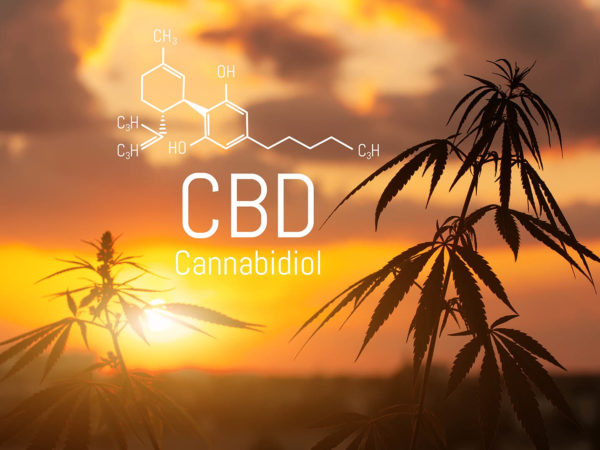
Alzheimer’s disease (AD), the most common form of dementia, is a devastating condition that affects some 7.4 million Americans today. There is no cure. There are only limited treatment options for those whose disease is progressing, and most of the drugs available to AD patients are intended just to ease symptoms. Cannabidiol (CBD) may one day join the list of treatment options, although the evidence is not there yet.
CBD is one of the major constituents of cannabis. While many cannabis products contain CBD, those marketed as “CBD only” contain less than 0.3 percent THC (tetrahydrocannabinol), the cannabis compound that gets you high. CBD has been used or tested for many conditions, including anxiety and chronic pain. There has been only limited research into CBD and Alzheimer’s disease, with some interesting early results.
Cannabidiol reduces neuroinflammation, which is one of the underlying issues associated with Alzheimer’s disease. Much of the research in Alzheimer’s disease over the past few decades has focused on the amyloid beta plaques and neurofibrillary tangles that characterize the condition. Neuroinflammation, however, has not been as well studied.
In 2025, researchers at University College London published a review of the current evidence on CBD and Alzheimer’s disease. They found that in preclinical studies CBD “significantly and consistently” reduced key markers of neuroinflammation. The studies analyzed were conducted on mice, which are surprisingly good models for the human brain, but the benefits reported have not yet been fully established in humans.
In limited clinical studies on people, researchers detected a small benefit for managing agitation and other behaviors in patients, as well as easing caregiver distress. That’s promising, but we would need a lot more rigorous research before we could draw solid conclusions from it. And although reducing neuroinflammation is an important goal on its own, it has yet to be fully explored as a pathway in the disease.
Given how serious the disease burden is and how limited the treatment options, prevention remains of paramount importance. Alzheimer’s disease may start to develop 20 years before symptoms emerge, providing a long-term opportunity to reduce risk. The most established contributory factors are age, family history, and genetics, which are of course beyond your control. There are, however, some lifestyle changes that may help, including staying physically and socially active, managing your heart health and your blood sugar, not smoking, reducing alcohol consumption, and getting good sleep. These are all excellent habits for multiple reasons. I recommend you take steps for healthier living today, no matter your age.
Andrew Weil, M.D.
Sources
Wu S, Rajiah T, Ali AB. Therapeutic Potential for Cannabidiol on Alzheimer’s Disease-Related Neuroinflammation: A Systematic Review and Meta-Analysis. Int J Mol Sci. 2025 Dec 11;26(24):11963. doi: 10.3390/ijms262411963. PMID: 41465389; PMCID: PMC12733121. pmc.ncbi.nlm.nih/articles/PMC12733121/
Emami Naeini S, Bhandari B, Hill B, Perez-Morales N, Rogers HM, Khodadadi H, Young N, Maciel LM, Yu JC, Hess DC, Morgan JC, Lopes Salles É, Wang LP, Baban B. Rethinking Alzheimer’s: Harnessing Cannabidiol to Modulate IDO and cGAS Pathways for Neuroinflammation Control. eNeuro. 2025 Oct 10;12(10):ENEURO.0114-25.2025. doi: 10.1523/ENEURO.0114-25.2025. PMID: 41052930; PMCID: PMC12519923.pmc.ncbi.nlm.nih/articles/PMC12519923/
Dopkins N, Miranda K, Wilson K, Holloman BL, Nagarkatti P, Nagarkatti M. Effects of Orally Administered Cannabidiol on Neuroinflammation and Intestinal Inflammation in the Attenuation of Experimental Autoimmune Encephalomyelitis. J Neuroimmune Pharmacol. 2022 Jun;17(1-2):15-32. doi: 10.1007/s11481-021-10023-6. Epub 2021 Nov 10. PMID: 34757526; PMCID: PMC10207886. pmc.ncbi.nlm.nih/articles/PMC10207886/