
Is Your Pillow Impacting Your Sleep?
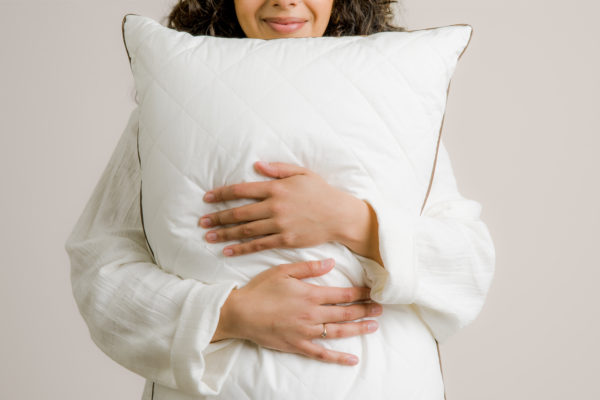
Pillows are often the key to comfortable sleep, and according to experts, the wrong pillow not only affects your sleep but can also have negative impacts on your general health. Discovering the right pillow for you is key to better sleep and can help reduce neck, back, and shoulder pain.
How Does a Pillow Affect My Sleep?
On average, pain and discomfort cause adults to lose up to an hour of sleep every night, with over 57% of people waking up with pain three or more times each night. While these statistics include all types of pain, 56% say it is due to back pain, and another 41% claim the pain is in their neck, both of which can be improved with the correct pillow support.
It has been shown that your pillow impacts sleep comfort just as much as your mattress. The type of pillow you need is based on a number of variables, such as your body type, sleep position, mattress type, and health needs.
How Do I Identify the Right Pillow for Me?
Ideally, your pillow should help maintain the natural curvature of your spine and offer a comfortable amount of support for both your neck and head. Regardless of the sleep position you prefer, it should provide the level of support your body needs most. The loft level and firmness of the pillow combine to create the ideal level.
Beyond alignment, here are the top things to look for and consider when searching for the right pillow:
- Breathability and Thermoregulation: Depending on the type of fill, your pillow can retain a lot of your sleep heat, causing discomfort for warmer sleepers. Finding a pillow with a breathable or thermoregulating fill and cover can help relieve some of this heat for cooler, more comfortable sleep.
- Pillow Shape: While most pillows are still the typical rectangular shape, today, we can find a wide range of shapes and sizes that work for different sleep positions. The type of fill also has an impact on the pillow’s shape and adaptability.
- Hypoallergenic Materials: For those who suffer from allergies, naturally hypoallergenic pillows can help prevent the buildup of irritants, minimizing nighttime allergic reactions and flare-ups.
All-Natural Pillow Alternatives
Many of today’s pillows include materials made from synthetic or semi-synthetic materials, such as memory foam and polyester fiber. Pillows with all-natural fills often have better thermoregulation and hypoallergenic properties. A few good alternatives to today’s popular synthetic materials include:
- Kapok fiber, coming from the kapok tree, has a silky-soft, fluffy feel but offers moldable support that cradles the head and neck and relieves pressure. It is both breathable and hypoallergenic.
- Wool pillows offer stable, cushioning support with adaptable moldability. When made with Merino Wool, the pillow can provide added breathability, moisture-wicking, and hypoallergenic benefits.
- Down & Feather pillows offer extremely soft, plush and cloudlike support. These pillows are light, airy, and incredibly breathable.
Sources
- “Ergonomic Consideration in Pillow Height Determinants and Evaluation.” National Library of Medicine. pmc.ncbi.nlm.nih/articles/PMC8544534/
- “How Painsomnia Is Stealing Our Sleep.” Sleep Foundation. sleepfoundation/sleep-news/painsomnia-steals-an-hour-of-sleep-nightly
- “Is Your Pillow Hurting Your Health?” Harvard Health Publishing. health.harvard/pain/is-your-pillow-hurting-your-health
- “Pillow Research Methodology.” Sleep Foundation. sleepfoundation/research-methodology/pillows
Today’s Health Topics
Editor's Pick
Health Focus
Ask Dr. Weil's Q&A
| sponsor | ||
 |
||
|
||
|