

Q & A Library


Print this page | Send to a friend | Sign up for free e-bulletins
 | Bookmark This Page

FREE E-Bulletins
Free HealthTips & Advice
Email


Bookmark and Share

Q
Choosing Canola Oil?
I notice that the FDA has permitted canola oil to carry a label saying that it can reduce the risk of heart disease. You emphasize olive oil, but some of your recipes call for canola oil. Do you recommend canola oil as an alternative to olive oil?
A
Answer (Published 12/6/2006)

In October 2006, the FDA authorized new health labeling for canola oil and foods containing canola oil. The labels can say that limited evidence suggests that eating 19 grams of canola oil daily (that's about one and a half tablespoons) may reduce the risk of heart disease as long as you also reduce the amount of saturated fat in your diet and don't increase your total caloric intake.

Related Weil Products
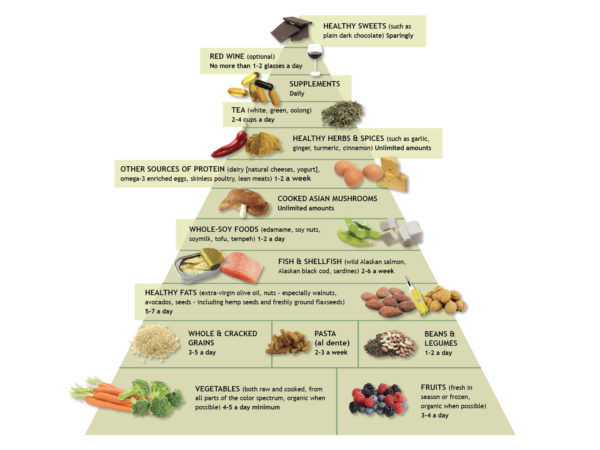
Dr. Weil on Healthy Aging for Healthy Eating - Dr. Weil on Healthy Aging for Nutrition - Want to change your diet? The Dr. Weil on Healthy Aging online guide is your anti-inflammatory diet headquarters. Start your free trial and get access to an exclusive version of Dr. Weil's Anti-Inflammatory Food Pyramid, hundreds of recipes, eating guides, and more.

Canola oil is primarily a monounsaturated fat and, as such, is healthier than saturated fats or polyunsaturated oils. However, I consider it a distant runner-up to olive oil. We have a wealth of evidence showing that populations that consume good quality olive oil as a primary dietary fat have significantly lower rates of both heart disease and cancer than those that don't. We have no comparable epidemiological data for canola. Also unlike extra-virgin olive oil, canola oil doesn't contain the anti-oxidant polyphenols that are protective against heart disease and cancer.

advertisement

Canola oil is extracted from rapeseed, a plant in the cabbage family. Rapeseed oil is the traditional cooking oil of India and southern China, but the kind we use was bred in Canada to contain less erucic acid, a toxic fatty acid, than other varieties. This Canadian oil became known as canola oil.

I use canola oil in moderation, when I want a neutral-tasting oil, but I always look for organic, expeller-pressed brands. The lower-cost products sold in supermarkets have often been extracted with chemical solvents or high-speed presses that generate heat. Both methods alter the oil's fatty acid chemistry in undesirable ways. Furthermore, canola oil producers use a lot of pesticides on their crops, and I suspect that residues find their way into the finished product, so be sure to check labels.

Andrew Weil, M.D.

Do you use canola oil? Click here to state your case in our discussion groups.
Creative Commons License Some Rights Reserved Creative Commons Copyright Notice
A portion of the original material created by Weil Lifestyle, LLC on DrWeil.com (specifically, all question and answer-type articles in the Dr. Weil Q&A Library) is licensed under a Creative Commons Attribution-Noncommercial-No Derivative Works 3.0 United States License.
advertisement
 
Copyright © 2010 Weil Lifestyle, LLC
Information on this web site is provided for informational purposes only and is not intended as a substitute for the advice provided by your physician or other healthcare professional. You should not use the information on this web site for diagnosing or treating a health problem or disease, or prescribing any medication or other treatment.