

Q & A Library


Print this page | Send to a friend | Sign up for free e-bulletins
 | Bookmark This Page

FREE E-Bulletins
Free HealthTips & Advice
Email


Bookmark and Share

Q
Can a Green Tea Component Promote Weight Loss?
What is EGCG? One vitamin company is touting it on TV for weight loss, and it's in their antioxidant formula.
A
Answer (Published 4/12/2005)

EGCG stands for epigallocatechin-3-gallate. It is the main antioxidant in tea, said to be more than 100 times more powerful than vitamin C. There is more of it in white and green tea than in black tea.

Related Weil Products
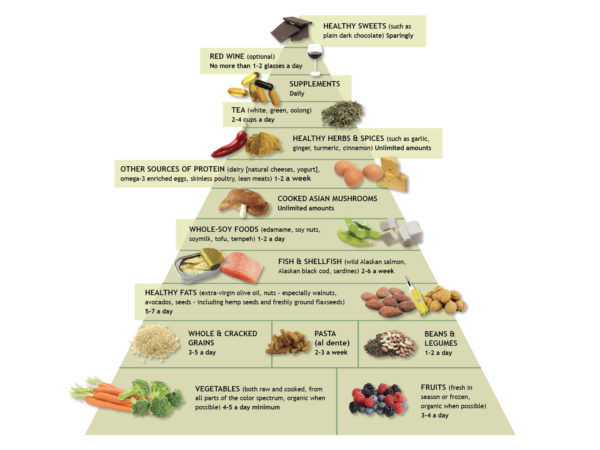
Dr. Weil on Healthy Aging for Healthy Eating - Dr. Weil on Healthy Aging for Nutrition - Want to change your diet? The Dr. Weil on Healthy Aging online guide is your anti-inflammatory diet headquarters. Start your free trial and get access to an exclusive version of Dr. Weil's Anti-Inflammatory Food Pyramid, hundreds of recipes, eating guides, and more.

EGCG is responsible for the cancer-protective effect observed with green tea. It also appears to protect the heart and arteries from oxidative damage and, applied topically, may protect the skin from the damaging effects of ultraviolet radiation and reverse precancerous skin changes. To get an optimal dose of EGCG, you should drink about four cups of green tea daily.

advertisement

Despite its many beneficial effects, I know of no good evidence to suggest that EGCG promotes weight loss. A study at the University of Chicago did show that rats injected with EGCG lost their appetites and ate up to 60 percent less than normal, but there was no effect on the rats' appetites when they were given EGCG orally. The researchers who conducted the study speculated that long-term oral administration of EGCG might have the same effect on appetite as the injections but cautioned that humans would have to drink green tea constantly to get the results seen in the animal study. Furthermore, the EGCG injections caused hormonal changes in the rats that could have negative effects on health if they occurred in humans.

The research most often cited in advertisements for weight-loss products containing EGCG include a very small study (only 10 men took part) published in the December 1999 issue of the American Journal of Clinical Nutrition. It showed that 90 mg of EGCG plus 50 mg of caffeine boosted metabolism. Another study mentioned in the ads was published in the January 1, 2002 issue of Phytomedicine and suggested that taking EGCG supplements might result in a weight loss of about 2.5 pounds per month. Emphasis is on "might." I'd suggest drinking green tea for its proven health benefits and forget about EGCG for losing weight. Instead, concentrate on eating less and exercising more.

Andrew Weil, M.D.

Creative Commons License Some Rights Reserved Creative Commons Copyright Notice
A portion of the original material created by Weil Lifestyle, LLC on DrWeil.com (specifically, all question and answer-type articles in the Dr. Weil Q&A Library) is licensed under a Creative Commons Attribution-Noncommercial-No Derivative Works 3.0 United States License.
advertisement
 
Copyright © 2010 Weil Lifestyle, LLC
Information on this web site is provided for informational purposes only and is not intended as a substitute for the advice provided by your physician or other healthcare professional. You should not use the information on this web site for diagnosing or treating a health problem or disease, or prescribing any medication or other treatment.