


Q & A Library


Print this page | Send to a friend | Sign up for free e-bulletins
 | Bookmark This Page

FREE E-Bulletins
Free HealthTips & Advice
Email


Bookmark and Share

Q
Avoid Fruit With Diabetes?
My sister says you should eat very little fruit if you have diabetes, and that eating too much will raise your blood-sugar level. I say fruit is a natural source of sugar and yet you don't want to overdo it. What do you think about eating fruit if you have diabetes?
A
Answer (Published 12/28/2004)

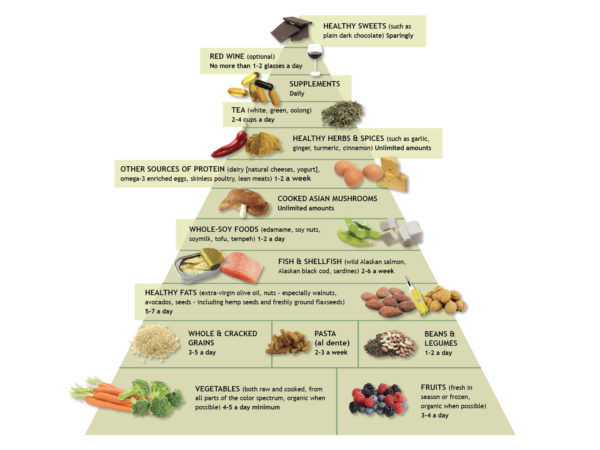
Fruits provide us with health-enhancing vitamins and phytochemicals as well as fiber, all important components of our diets, and there is no reason why people with diabetes should forego these benefits. However, you may have to be careful about the fruits you choose, how often you eat them and when you eat them. If you take a look at the glycemic index (GI), a measure of how fast carbohydrate foods (which include fruits) are converted in the body to blood glucose, you'll see that there are big differences between fruits. I recommend choosing fruits that rank low on the glycemic index. Low rankings are those that score below 55, intermediate-GI foods score between 55 and 70 and high GI foods score above 70.

Related Weil Products
Dr. Weil's Vitamin Advisor for Diabetes - If you have type II diabetes, a healthful diet and lifestyle and specific supplements and herbs may help manage symptoms. Learn more and get your free, personalized Dr. Weil's Vitamin Advisor Recommendation today.

For example, some good fruit choices would include an average-sized apple that scores 38; cherries, which score 22; grapefruit (25); an average-sized orange (44); an average-sized pear (38); a plum (39). Intermediate GI fruits include banana (55); cantaloupe (65); mango (55); papaya (58); pineapple (66). High GI fruits include dried dates (103); and canned fruit cocktail (79). How quickly fruit will raise your blood sugar depends on such considerations as whether you eat the fruit after a high-fat meal or drink it as a glass of fruit juice on an empty stomach. You'll also want to consider what your blood-sugar level is when you eat the fruit. If you're monitoring your blood glucose, you should be able to figure out how it responds to eating fruit. It is also important to pay attention to the size of the fruit you eat - choose a small or medium-sized apple over a large one (or eat only half of the large one). A quick and easy measure of the right serving size of fruit is the amount that can comfortably fit in the palm of your hand. Anything bigger than that is too large.

advertisement

The question is not whether or not you should eat fruit but rather how much and what kinds of fruit you should be eating. A little experimentation can go a long way.

Andrew Weil, M.D.

Creative Commons License Some Rights Reserved Creative Commons Copyright Notice
A portion of the original material created by Weil Lifestyle, LLC on DrWeil.com (specifically, all question and answer-type articles in the Dr. Weil Q&A Library) is licensed under a Creative Commons Attribution-Noncommercial-No Derivative Works 3.0 United States License.
advertisement
 
Copyright © 2010 Weil Lifestyle, LLC
Information on this web site is provided for informational purposes only and is not intended as a substitute for the advice provided by your physician or other healthcare professional. You should not use the information on this web site for diagnosing or treating a health problem or disease, or prescribing any medication or other treatment.