

A surprisingly large proportion of overweight and obese people appear to have no increase in heart disease risk. At the same time, a surprisingly large percentage of normal-weight people have a cluster of heart risks. That’s according to a report in the August, 2008, issue of Archives of Internal Medicine.
In the study, researchers at the Albert Einstein College of Medicine, Bronx, N.Y., and colleagues assessed body weight and metabolic abnormalities (including high blood pressure, elevated triglycerides and low HDL or "good" cholesterol) in 5,440 people. Participants were considered metabolically healthy if they had none or one abnormality and metabolically abnormal if they had two or more abnormalities. The result:
- About 23 percent of normal-weight adults were metabolically abnormal.
- About 51 percent of overweight adults were metabolically normal.
- About 31 percent obese adults were metabolically normal.
Normal-weight people with metabolic abnormalities tended to be older, less physically active and have larger waists than healthy normal-weight individuals. Obese people with no metabolic abnormalities were more likely to be younger, black, more physically active and have smaller waists than those with metabolic risk factors.
The bottom line recapitulates what other data show: it’s far better to be active and overweight, even obese, than sedentary and normal weight. The goal of optimum health is not to be thin, but to be as healthy as you can, regardless of weight. It’s very clear to me that some people are genetically programmed to carry extra pounds, and as long as they maintain their cardiovascular health through exercise, they should indeed be considered healthy.
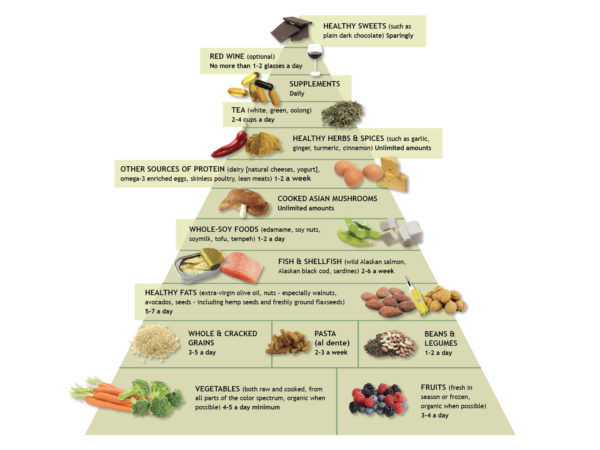
Eating an Anti-Inflammatory Diet
The Dr. Weil-recommended anti-inflammatory diet is available on Dr. Weil on Healthy Aging. Recipes, articles, eating guides and tools (including an exclusive version of Dr. Weil’s Anti-Inflammatory Food Pyramid) are a click away - start your free trial today!
Fish Oil Against Heart Failure
Patients with chronic heart failure may do a bit better by taking fish oil supplements, or eating more fish, than with the drugs that are commonly used to treat the disorder. Scientists in Italy found compelling evidence this works. Researchers there gave 3,500 patients a daily omega-3 fish oil supplement, and also provided a similar size group of patients a placebo. Both groups were followed for four years. At the same time, the investigators gave 2,285 patients a statin drug (Crestor) and dispensed placebos to 2,289 patients. After four years, they observed no difference in heart failure rates between these two groups. But the patients in the first study who received fish oil did better than those who received the placebo. The difference was not huge, but fish oil definitely worked better than the placebo or the statin. The study was published in the online August 31, 2008 issue of The Lancet. In commenting on the findings, the president of the American College of Cardiology said that U.S. guidelines for treating chronic heart failure probably would change to recommend that more patients eat fish or take omega-3 supplements.
Should You Take Omega-3s?
Find out if you should take fish oil supplements - and how much is right for you - when you get your free recommendation from Dr. Weil’s Vitamin Advisor. It takes into account your health history, for personalized results. Order today and get free shipping!
Walking Makes Memory (Slightly) Better
Seniors with memory problems can boost their mental functioning a bit with regular exercise. This finding, from Australia, follows a study in which 85 adults over age 50 were recruited to perform at least two and a half hours of physical activity (mainly brisk walking) every week. Another group of 85 was asked not to exercise. After six months, the exercise group scored an average of 1.3 points better on a test of brain function than those in the non-exercise group. The benefits remained a year later, although they had diminished to about 0.7 points. This study was the first to look at the effect of exercise on older people with memory problems. It showed that exercise worked at least as well as (if not better than) drugs used to improve mental function. Larger studies will be needed to confirm these results. The researchers cautioned that these results don’t demonstrate that exercise reduces the risk of Alzheimer’s disease or dementia. They suggested that exercise might have helped by improving blood flow to the brain, but didn’t do any testing during the study to look for physical changes. The findings were published in the September 3, 2008 issue of the Journal of the American Medical Association.
Need a Walking Plan?
Whether you want to get on a plan for exercise, eating or connecting with yourself, Dr. Weil’s My Optimum Health Plan can help! Learn more - take a free tour, and get a complimentary recipe. Visit now!
Ginger-Carrot Soup
Usually found in tropical gardens, ginger root - which is actually an underground stem, or rhizome - sprouts large pink and orange flowers that look as if they've been carved out of wax. Although they are a much more common sight in home gardens, carrots (a member of the parsley family) aren't given to such showy blooms. Nevertheless, carrots pack a nutritional punch as impressive as any ginger blossom. Put the two roots together and you've got one of the most delicious flavor combinations I know of. Buy smooth ginger pieces (wrinkled ones are old and dry) and peel the skin away. Ginger is a wonderful digestive aid that strengthens the lining of the upper gastrointestinal tract, protecting against ulcers and parasites. The carotenes from carrots fortify the immune system and help maintain healthy skin and hair. When buying carrots, avoid those with cracks and be sure to remove carrot greenery, as it leaches moisture and vitamins from the roots.
View Recipe
Healthy Aging Tip
Courtesy of Dr.Weil on Healthy Aging
Seasonal Foods - Olives. Olives are one of the oldest foods known, having originated in Crete some five to seven thousand years ago. While olives have a high fat content, almost three-fourths of their fat is the healthy monounsaturated type, which offers cholesterol-lowering properties. Olives are also a good source of vitamin E (which helps to neutralize free radicals), iron, copper and dietary fiber.
Feature Discussion:
“How do you treat acid reflux?” asks little53.
My boyfriend was diagnosed with acid reflux. (Does anyone have)… ideas (for) alternative treatments? I have read what Dr. Weil has to say … but am wondering if anybody has personal experience.
Sponsor
Energy Levels Running on Low?
As we grow older, a variety of factors can damage the ability of our cells to generate energy, which in turn can lower overall health and vitality. To keep your cells' metabolism vigorous, consider Weil Juvenon Healthy Aging Support. This science-based formula helps improve cellular health, making the cycles of energy production more efficient. Make Weil Juvenon part of your healthy lifestyle, anytime.
What’s New
Senior Health Care and Wellness Forum
September 29, 2008, Tucson, Arizona
Congresswoman Gabrielle Giffords, in partnership with PCOA, is sponsoring a special half-day forum on how to improve individual healthy aging. Special luncheon speaker will be Dr. Andrew Weil. The forum will also feature presentations by leading local experts on exercise & nutrition, and PCOA will present ways older adults can take responsibility for their own health. Cost is $25 per person. Seating is limited to 250 people. Reserve your seat today by registering online or RSVP by September 19 to PCOA at (520) 790-0504. YWCA, 525 N. Bonita Ave., Tucson Ariz.
Healthy Aging Workshop with Andrew Weil, M.D.
October 26 - 29, 2008, Tucson, Arizona
During this three-day workshop you'll learn techniques that will help you thrive in every stage of your life. Join Dr. Weil and his personally selected group of experts from various fields (nutrition, fitness, movement and more) pertaining to healthy aging. There are a limited number of openings for this extraordinary opportunity to meet and learn from Dr. Weil himself, the founder of the Program in Integrative Medicine at the University of Arizona. For more information, or to register visit Miraval's Web site.
FEATURED PRODUCTS