
Q & A Library


Print this page | Send to a friend | Sign up for free e-bulletins
 | Bookmark This Page

FREE E-Bulletins
Free HealthTips & Advice
Email


Digg!

Q
Vegetarian Sources of Omega-3?

How can vegans and vegetarians get enough omega-3s?

A
Answer (Published 11/10/2009)

It's difficult for vegans (vegetarians who eat no foods derived from animals, including eggs and milk) to get adequate omega-3 fatty acids from their diets, since the two essential omega-3 fatty acids, EPA (eicosapentaenoic acid) and DHA (docosahexaenoic acid) are most available in fish oil. Vegetarian sources of omega-3s provide only ALA (alpha-linolenic acid), a precursor form that the body cannot convert efficiently to the DHA and EPA it needs. Other essential nutrients in short supply in a vegan or vegetarian diet are vitamin B12 and zinc. Eliminating meat from your diet also means that you're lacking the food source of the most readily absorbed heme iron (vegans and vegetarians need twice the intake of iron as non-vegetarians).

Related Weil Products
Dr. Weil's Vitamin Advisor for Supplements & Herbs - If you are interested in supplementing your diet, and want to take the mystery out of choosing vitamins, try Dr. Weil's Vitamin Advisor. Visit today for your free, personalized Dr. Weil's Vitamin Advisor Recommendation.

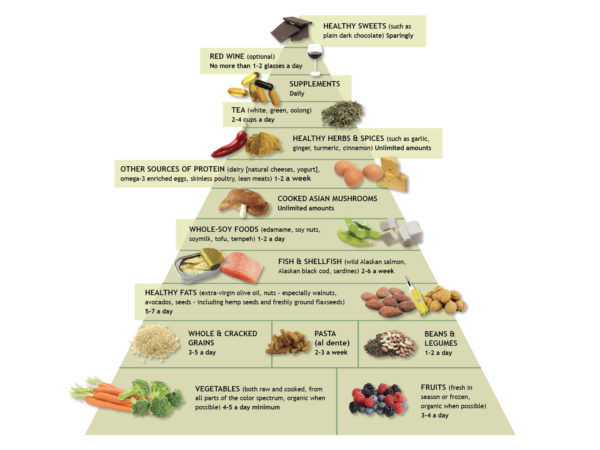
I recommend that anyone who eats no oily fish at least twice a week take an omega-3 fatty acid supplement. The best available of these is fish oil at a dose of 2 to 3 grams per day, but vegans and others whose diets don't include fish can substitute Neuromins DHA, a product which is extracted from carefully grown microalgae (vegans can break the gelatin capsule to get the oil). Taking 400 to 600 mg a day of Neuromins DHA and relying on dietary sources of ALA is probably the best vegan strategy for getting omega-3s. A daily handful of walnuts or one to two tablespoons of freshly ground flaxseed per day provide ALA. I hope we will soon see products made from algae that provide both EPA and DHA. I also recommend that vegans and vegetarians supplement with at least 10 micrograms (mcg) of vitamin B-12 daily or take 1,000 mcg once a week.

advertisement

To get enough iron without eating meat, cook in iron pots and eat such iron- rich foods as blackstrap molasses, cocoa, and leafy greens. You can boost your absorption of iron-rich foods by eating foods high in vitamin C at the same meal. And since many animal-based foods that provide zinc are shunned, vegans and vegetarians should take 8 to 15 mg of supplemental zinc per day.

Andrew Weil, M.D.

Are you a vegetarian? A vegan? Click here to debate nutritional needs in our discussion groups.
advertisement
 
Copyright © 2009 Weil Lifestyle, LLC
Information on this web site is provided for informational purposes only and is not intended as a substitute for the advice provided by your physician or other healthcare professional. You should not use the information on this web site for diagnosing or treating a health problem or disease, or prescribing any medication or other treatment.