

advertisement


Q & A Library


Print this page | Send to a friend | Sign up for free e-bulletins
 | Bookmark This Page

Q
Confused by the Glycemic Index?

I have been trying to avoid high glycemic index carbohydrates such as white flour and white pasta in favor of whole grain breads, whole wheat or unbleached flours and brown rice instead of white. However, I'm confused. White spaghetti and chocolate have low GI ratings, while brown rice ranks high.

A
Answer (Published 6/11/2009)

The glycemic index (GI) ranks carbohydrate foods based on how quickly the body turns them into glucose (blood sugar), provoking an insulin response. Whole wheat bread and products labeled "whole grain" are not good choices because they usually are made with pulverized grains (flour) rather than whole or cracked grains. For that reason, most whole wheat bread has the same high GI ranking as white bread - about 70. I recommend cutting down on all foods made with flour and increasing consumption of grains in their more natural state, such as wild rice, barley, quinoa, millet and wheat berries.

Related Weil Products
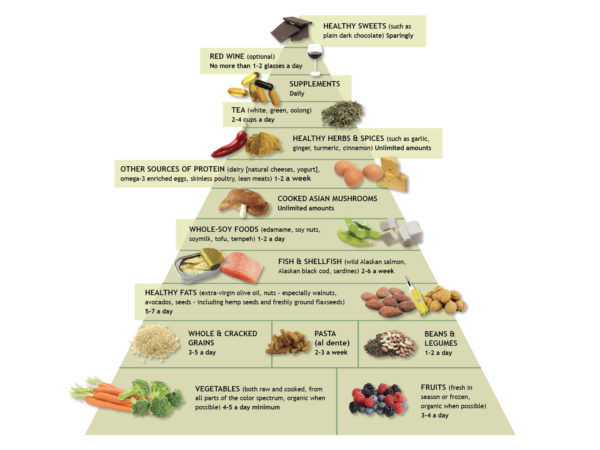
Dr. Weil on Healthy Aging for Healthy Eating - Dr. Weil on Healthy Aging for Nutrition - Want to change your diet? The Dr. Weil on Healthy Aging online guide is your anti-inflammatory diet headquarters. Start your free trial and get access to an exclusive version of Dr. Weil's Anti-Inflammatory Food Pyramid, hundreds of recipes, eating guides, and more.

Grains in their natural form have a low glycemic index, while processed carbohydrates, especially those made with flour or puffed grains, have a high GI. The reason is that it takes longer for digestive enzymes to reach the starch inside whole grains or grains cracked into large pieces, slowing down the conversion of starch to sugar. Pulverized grains have a tremendous surface area for enzymes to work on. This leads to quick starch-sugar conversions that spike blood sugar levels, creating dips later on that can prompt more consumption of pulverized grains, and the cycle continues.

When using the glycemic index, be sure to consider "glycemic load," which takes account of how many grams of carbohydrate a normal serving contains. For example, carrots rank high on the glycemic index, but the amount of carbohydrates you would actually consume in a normal serving is pretty low, only 6.2 grams. Don't avoid carrots (or beets) based on their GI rankings. Unless you eat huge portions, these vegetables will not disturb your blood sugar very much, and they provide important phytonutrients.

Pasta is also a special case. When it is cooked al dente (that is, until barely tender) and eaten in moderation, it does not present the body with a high glycemic load because the pulverized grain comes apart slowly in the stomach. Dark chocolate is okay, because it is low in sugar.

To calculate glycemic load, multiply the number (in grams) of the carbohydrates you would consume in a serving by the food's ranking on the glycemic index. Although GI rankings are written as whole numbers, they actually are percentages, so if the GI of a food is 71, treat this as 71% when you do the math. Foods with a low glycemic load rank from one to 10; the medium range is 11-19 and high is 20 or above.

While the concept of glycemic load is helpful, doing calculations for everything you eat isn't practical. Instead, simply reduce your consumption of processed and refined foods (such as snack foods, white bread, sweetened drinks, and sugary desserts). Eat more sweet potatoes and fewer white potatoes, less bread (unless it's really chewy and grainy), more whole grains and fewer products made with flour, more beans and more temperate fruits (especially berries, cherries, apples, and pears) and fewer tropical ones.

To learn more about all this, I recommend reading The Glucose Revolution: The Authoritative Guide to the Glycemic Index, by Thomas M.S. Wolever, M.D, Ph.D., Jennie Brand-Miller, Ph.D. (editor), Stephen Colagiuri, M.D. and Kaye Foster-Powell.

Andrew Weil, M.D.

Creative Commons License Some Rights Reserved Creative Commons Copyright Notice
A portion of the original material created by Weil Lifestyle, LLC on DrWeil.com (specifically, all question and answer-type articles in the Dr. Weil Q&A Library) is licensed under a Creative Commons Attribution-Noncommercial-No Derivative Works 3.0 United States License.

Dr. Weil's Vitamin Advisor
Receive Your FREE Personalized Vitamin Recommendation & Supplement Plan Today!

Free Vitamin Recommendation
Let Dr. Weil customize a free vitamin & supplement plan for you. Take the Vitamin Advisor questionnaire today!

Dr. Weil's Spontaneous Happiness
Based on his new book, this online
plan helps chart your 8-week path to
optimum emotional well-being.

Dr. Weil's Anti-Inflammatory Diet Food Pyramid
Our interactive tool can help improve overall health through diet.

Dr. Weil on Healthy Aging
Your Online Guide to the Anti-Inflammatory Diet. Start eating for your health - begin your free trial now.

Dr. Weil's Optimum Health Plan
Your 8-week plan to wellness.
Begin your journey today!
 

Dr. Weil's Head-to-Toe
Wellness Guide

Your guide to natural health.
Use the Wellness Guide today!

Condition Care Guide
Learn about health conditions from acne to vertigo, and Dr. Weil's view of the best treatment options for each.

Healthy Recipes
Discover a treasure trove of healthy, healing foods and creative, delicious ways to prepare them.

Q&A Library
Over 2,000 questions from you
and their corresponding answers
from Dr. Weil.

Vitamin Library
Supplement your knowledge within Dr. Weil's vitamin compendium. Learn why they are necessary and more.

 
Copyright © 2012 Weil Lifestyle, LLC
Information on this web site is provided for informational purposes only and is not intended as a substitute for the advice provided by your physician or other healthcare professional. You should not use the information on this web site for diagnosing or treating a health problem or disease, or prescribing any medication or other treatment.