

Q & A Library


Print this page | Send to a friend | Sign up for free e-bulletins
 | Bookmark This Page

FREE E-Bulletins
Free HealthTips & Advice
Email


Digg!

Q
Four Reasons to Grow and Eat Organic?

Is there any proof that organic food - or organic gardening and farming - is better for human health and for the planet?

A
Answer (Published 4/22/2008)

Earth Day is an appropriate time to address your question. This topic is probably worth a book, but I'll give you the four main reasons why I think organic food and organic gardening and farming are best for human and planetary health.

Related Weil Products
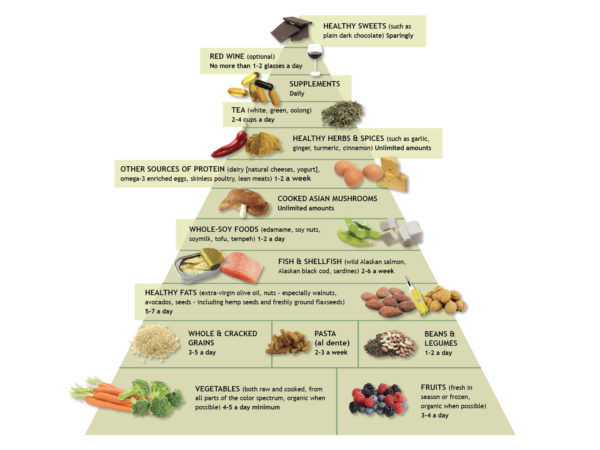
Dr. Weil on Healthy Aging for Healthy Eating - Dr. Weil on Healthy Aging for Nutrition - Want to change your diet? The Dr. Weil on Healthy Aging online guide is your anti-inflammatory diet headquarters. Start your free trial and get access to an exclusive version of Dr. Weil's Anti-Inflammatory Food Pyramid, hundreds of recipes, eating guides, and more.
  1. No pesticides: We know that conventionally grown foods consistently contain residues of pesticides that may be harmful. Some 865 pesticide active ingredients are now registered with the Environmental Protection Agency (EPA), and thousands of products containing them singly or in combination are used in conventional farming to kill insects and other agricultural pests. Many of these chemicals have been implicated in human and animal cancers, nervous system disorders, and other serious diseases.
     
  2. More antioxidants: Organically grown fruits and vegetables appear to have higher antioxidant levels than conventionally grown foods. A study published in the Feb. 26, 2003 Journal of Agricultural and Food Chemistry found that levels of antioxidants in organic corn were 58.5 percent higher than those in conventionally grown corn and that antioxidant levels in organically grown strawberries were about 19 percent higher than they were in conventionally grown strawberries. Data released in 2005 by the Organic Consumers Association showed that on average, the organic crops studied contained about one-third higher antioxidant content than comparable conventional produce. It also noted that levels of specific vitamins, flavonoids, and other health-protective compounds in organic foods were two or three times those found in matched samples of conventional foods.
    advertisement
     
  3. Better for the earth: A 22-year study at Cornell University found that raising crops organically produces the same yields of corn and soybeans as does conventional farming, but uses 30 percent less energy, less water, and no toxic chemicals. The study also found that organic farming conserved more water in the soil, caused less erosion, maintained soil quality, and conserved more biological resources than conventional farming. The study is a review of the Rodale Institute Farming Systems Trial, the longest running comparison of organic vs. conventional farming in the United States.
     
  4. Efficient: Contrary to arguments that only conventional farming methods can meet the world's need for food, a series of studies has shown that organic farming is just as productive, if not more so. A study reported in the March-April 2008 issue of Agronomy Journal showed that organic methods produced as much wheat and alfalfa and 90 percent of the amount of corn, soybeans and winter wheat as yielded by conventional methods, and organic farming methods build up soil instead of depleting it.

To which I would add, in my experience, organic food simply tastes better! Making a commitment to buy, or better yet grow, your own organic food is one of the best Earth Day resolutions you can make.

Andrew Weil, M.D.

Are you growing an organic garden? Click here to share your story in our discussion groups.
advertisement
 
Copyright © 2009 Weil Lifestyle, LLC
Information on this web site is provided for informational purposes only and is not intended as a substitute for the advice provided by your physician or other healthcare professional. You should not use the information on this web site for diagnosing or treating a health problem or disease, or prescribing any medication or other treatment.